§ 01 — The Author
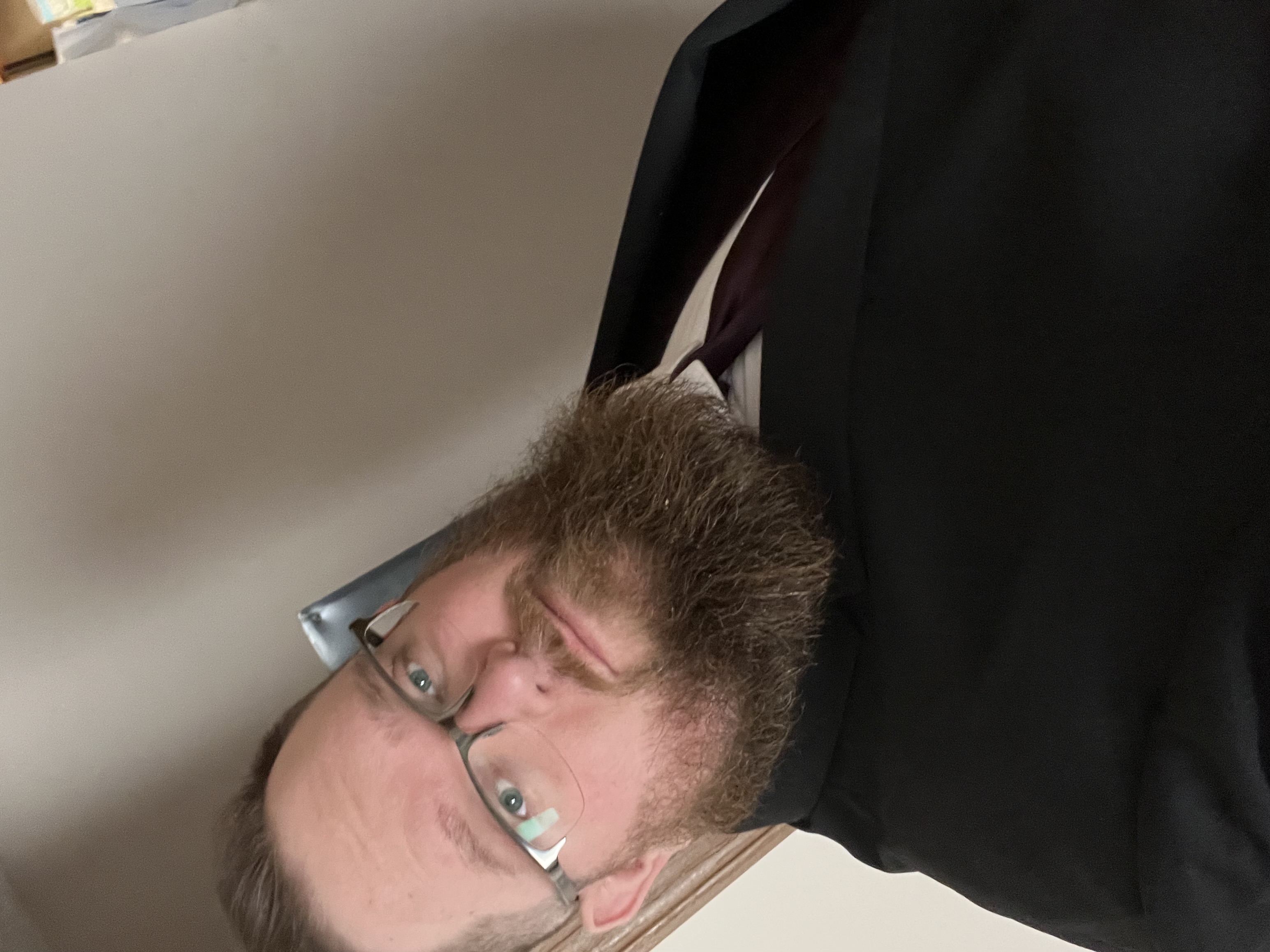
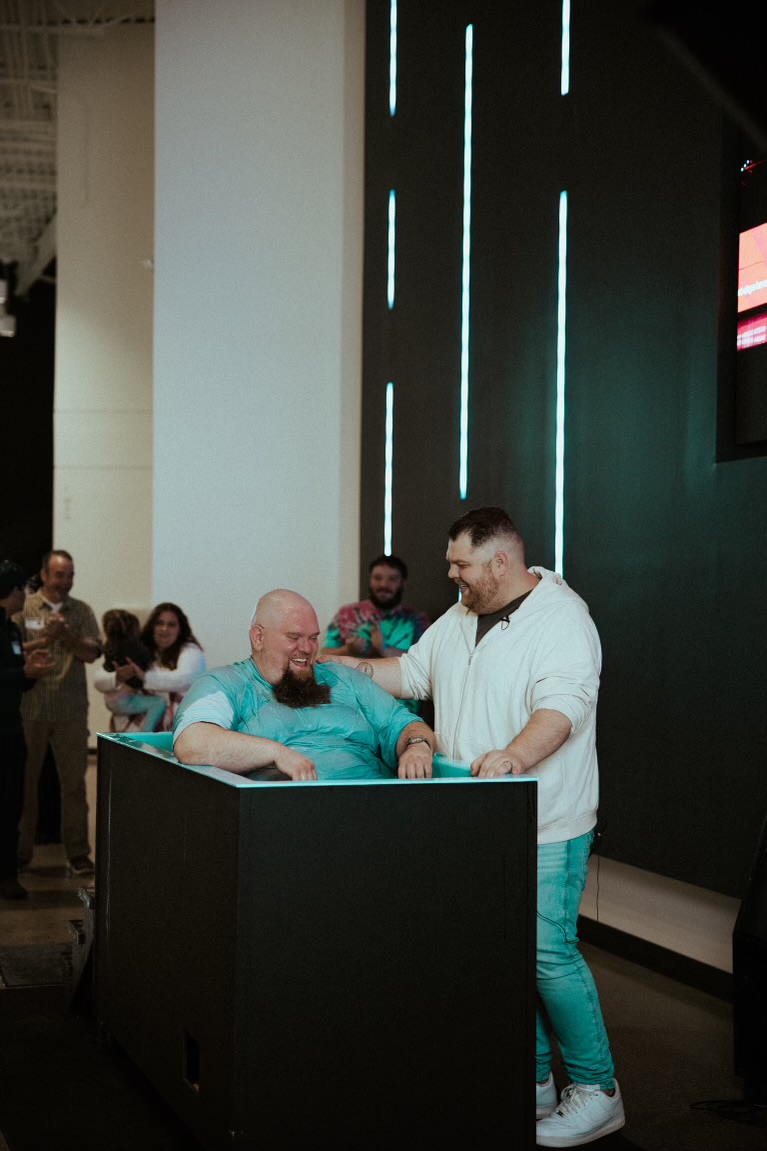
I started with poetry in middle school. There was something about putting words down and having them mean something — even if only to me — that I couldn't shake. I wasn't the reader my friends were back then. I'd pick up a book here and there when something caught me.
In seventh or eighth grade, I got a spot in an after-school creative writing club, and I took to it hard. I wrote the stories I wished I were reading. Looking back now, some of what I was describing — what I'd call conceptualizing today — had real comps out in the book world. I just didn't know it yet.
Then other things pulled me away, the way they do.
College brought it back, briefly. I never walked away with a degree — just enough credits for an associate's and money I'll never see again. My composition courses gave me a lot of freedom, and I ran with it: two-page essays turning into ten, sources cited, arguments built out of opposing research to prove my own point. I couldn't tell you today what any of it was actually about.
My last creative writing course changed something. The professor wrote historical romance, and she gave us exercises I still use. One of them was the first time I really got in touch with what I could do on the page. I wrote about seeing my grandfather, five or six years after he'd passed. I wasn't looking at the page anymore by the end. I was just seeing it happen. My professor read over my shoulder while I wrote it, and it brought her to tears too. She read it out loud to the class.
That was when I understood I had a way with words that could move people besides myself.
I kept writing after that, on and off, no schedule, no real plan. Life happened — some of it hard enough that it's become the raw material for the memoir I'm building now. For years I mostly gave it up. A little here, a little there. No plot. No structure.
Then a friend from trucking school — my brother, in every way that counts — told me to try working with AI.
I did.
Now I've got close to twenty books in some stage of development: outlined, drafted, or somewhere in between. Here's how it actually works. I bring a concept. Claude and I walk through what could happen. He prompts me, I prompt him, and the story comes together between us, slowly. Yes, he drafts things. But every word that stays is in my voice — I'm the one editing, the one deciding how it should sound, line by line.
I use AI, and I don't apologize for it. I build my stories with it. I build my story bibles with it. I built my entire shared universe with it. I could have done it alone, but I live with ADHD, and staying focused long enough to hold a whole universe in my head, organized and consistent, was never going to happen for me on my own. Now I have the bibles. I have the outlines. I have a whole system just for chapter-level tracking on top of that. I am more organized right now than I have ever been in my life, and it still surprises me some days.
All I'm asking is that you give it a chance — read what's been sitting in my head for years, back when I had no idea how to take an idea and actually turn it into a story.
The Road Is Not Found; It Is Written.
—Ellis (Inky)
I drive. The reason I got into it isn't the one most people would guess.
I've always been a big guy — 315 pounds as a freshman in high school. I was working at a gas station, sometimes closer to 80 to 100 hours a week between two locations.
I told my manager I was leaving for warehouse seasonal work and asked if I could come back after the season. Seasonal, nearly double the hourly wage, with the same hours.
He said I could.
I mean, this warehouse job was basically the same hours, double the wage, closer to home. Of course I jumped on it without thinking twice. When the season ended, I couldn't go back to the gas station.
The manager had been fired before I could return, once they realized how much of his job I'd actually been doing.
I spent the next five or six months unemployed. My girlfriend at the time cheated on me with my cousin — someone I don't talk to anymore. My pickup's steering column locked up on the interstate and I wrecked it. I stopped being able to function under the weight of all of it and fell into a depression deep enough that I still don't have a better word for it. I never saw a doctor about it.
I went to a church to audition for their drum line. Never actually auditioned. Instead, I walked out with a part-time lead on a large LTL carrier. I got my forklift certification a few days later.
On my thirtieth day, I was unloading the last thing off my assigned trailer — something I've called a crane basket for years, because that's what it looked like to me. Six feet tall, ten or twelve feet long, over a foot thick. I found out later it weighed more than two thousand pounds. It was leaning on its side against the trailer wall. I undid the strap closest to me, walked past it for the far strap, and on my way back out, something felt wrong. I turned around just in time to watch it start tipping toward me.
Big guys don't move fast.
It hit me across the gut, tore my shirt open, broke my tibia where it struck and my fibula just above the ankle.
I spent the next year in and out of hospitals, six to eight months of it in a nursing home for rehab and round-the-clock care.
When I was finally cleared, I had a year of bedrest behind of me and no strength left in my back to speak of.
I tried a warehouse job scraping melted plastic off a machine. They let me go because I couldn't stand for a shift. I tried a call center — the old CRT monitors and fluorescent lights left me crosseyed and half-blind by the end of a day, so I left that too. I spent about two months after that living off my parents, trying to figure out what came next.
I was on the edge of going back to school when an email showed up: a company offering to pay for CDL training. I applied, got approved, and they even covered the bus ride out. I got my license.
Then, right as I was about to head out with a trainer, they told me none of their available trainers were non-smokers. I'm allergic. I waited around for a few hours, then caught a ride home with a buddy from trucking school. Two more months passed before another company finally hired me, ran me through their training, and turned me loose on the world.
I'm still learning something new out here almost every week. I love getting to see this country, mile by mile, in a way most people never will. And I love finding the stories that live in the seams of the road — in the towns too small to earn more than a dot on the map.
That's where you'll find me. In the places that aren't places.
The road is written. We carry the weight.
—Ellis (Inky)
Principal Driver & Founder, Inky Compass Haulage — leased owner-operator.
Freightliner Columbia midroof, nicknamed Meridian Inscription — reefer and dry van capable, over a million miles on the clock.
Long-haul OTR across the continental US, home base in Ohio.
Leased owner-operator, 1099, FMCSA authority active.